Retracing Home
London Original Print Fair, Somerset House 14-17 May 2026
Benjamin Deakin, Kumari Khushboo, Shivangi Ladha, Ian Malhotra, Radha Pandey, Jo de Pear, Mila Rae Sarabhai, Scherry Shi, Nalinakshya Talukdar, Asha Vaidyanath, Adia Wahid
‘In Moments of Being‘ curated by Asha Vaidyanath & Shivangi Ladha
Text by Anuj Daga
Home is an unsettling territory. In a world marked by accelerated change, migration, and the turbulence of war and displacement, home becomes less a stable destination than an evolving condition—something lost, carried, rebuilt and reimagined. The question of home is one that art continually returns to, perhaps because home itself is never fixed. At the London Original Print Fair 2026, the India Printmakers’ House brings together eleven artists whose works expand ways of imagining dwelling in distance. To dwell is to make meaning of one’s situational and material choreography, and orient oneself to new coordinates of being in time. In this cohort, the artists broadly articulate their works under the themes of landscape as memory, environment as time, exploring location and setting and lastly those that connect to the deeper structures of the self.
Landscape as Memory
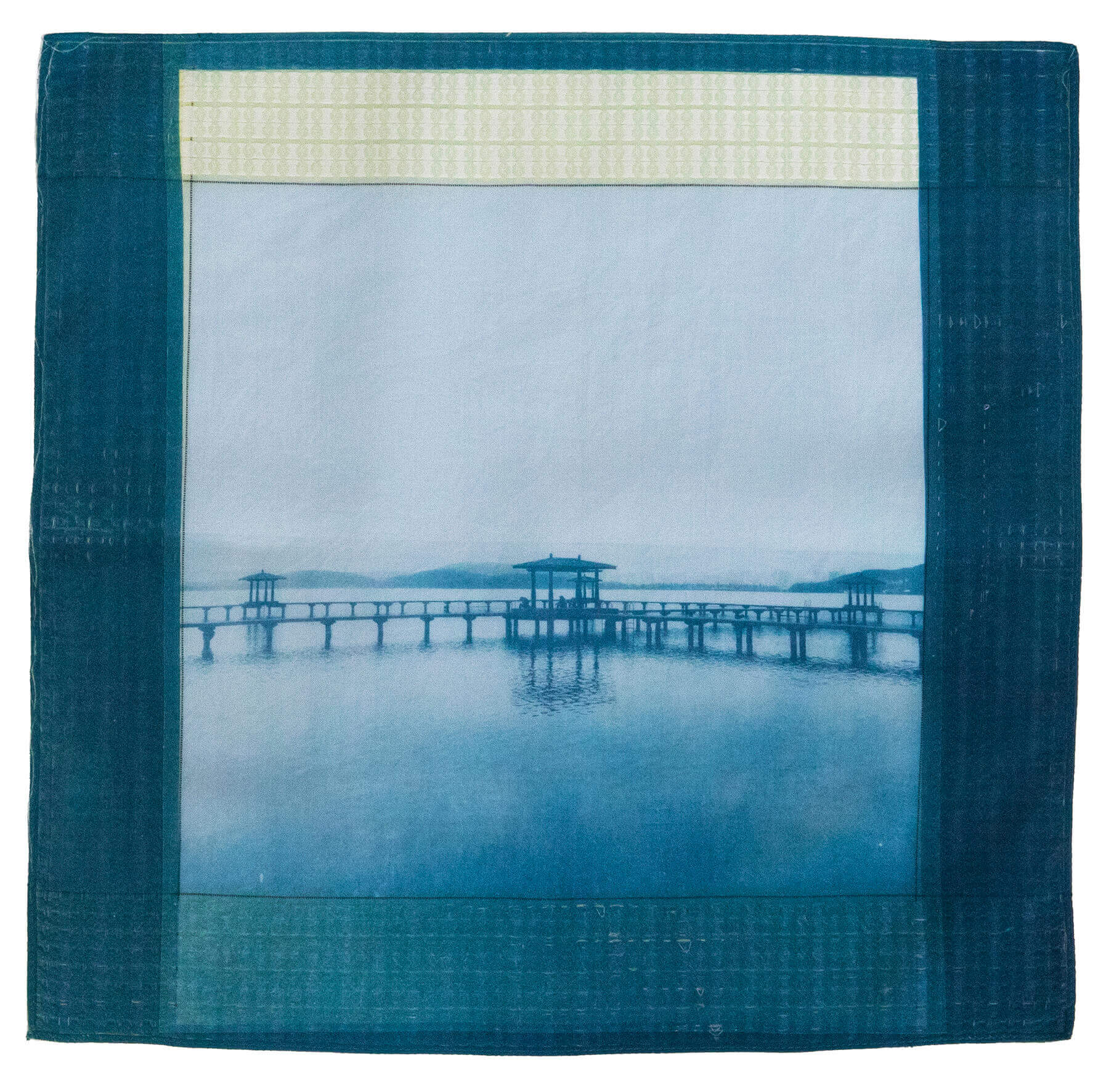
Scherry Shi, Landings I, 2026, Cyanotype, 39.9 x 39.9 cm
The faint fluidity of skies and waters of her hometown are encapsulated in the noir cyanotypes of Scherry Shi as she takes us in a dream-like landscape of memory. Printed through light on generations old handkerchiefs of her friend’s grandmother, the artist explains how “embroidered handkerchief is one of a few personal properties that women could keep for themselves as assets in history, especially in patriarchal China.” As we observe distinct moments of a quiet wooden bridge over a lake, or the space between two apartment buildings framing the sky through the domestic life oozing out of their windows, we realise that these hold special place within the memoryscape of the artist. The artworks are then daydreams on a veil – a translucent window through which we are teleported into another world that is distant, but brings it close.
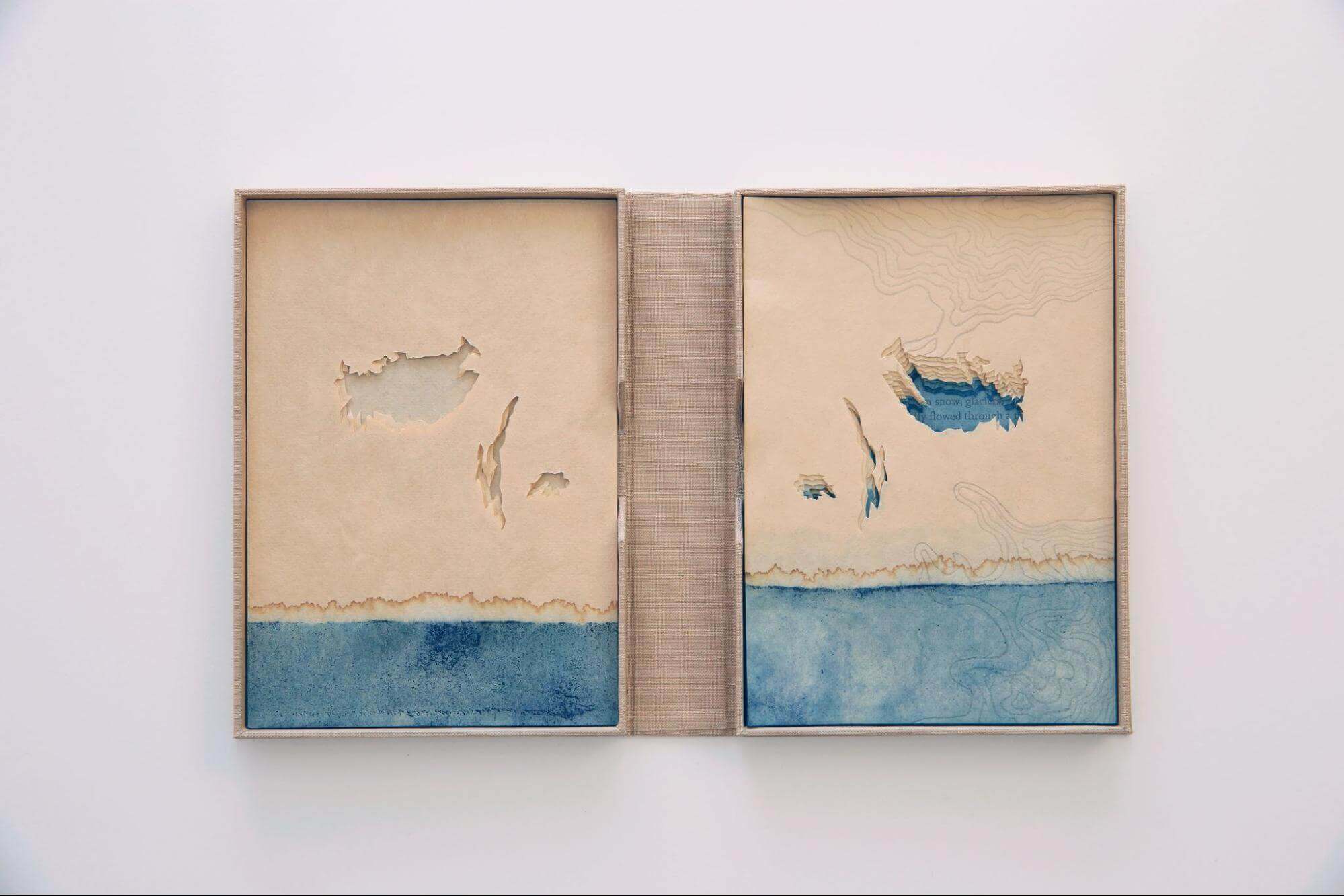
Radha Pandey, Artist Book, Deeptime, 2017
Radha Pandey’s work crafts contours onto paper to fold an eroding topography of the mountains and the water bodies onto each other. The works in themselves are cross-sections of time where in the rise and fall of sea levels and shifting terrains become more apparent. Presented in the form of a book, these artworks allude to hidden knowledge revealed only during the close reading of these specific chapters. It is here that the printed letters beyond a veil of colour become visible, demanding a discovery of a lost world. The contours lines drawn in pencil around these three textures attempt to bring the sky, water and land onto an equal plane of cartographic reading, making us conscious about the fragility and precarity of landscapes in the face of climate change.
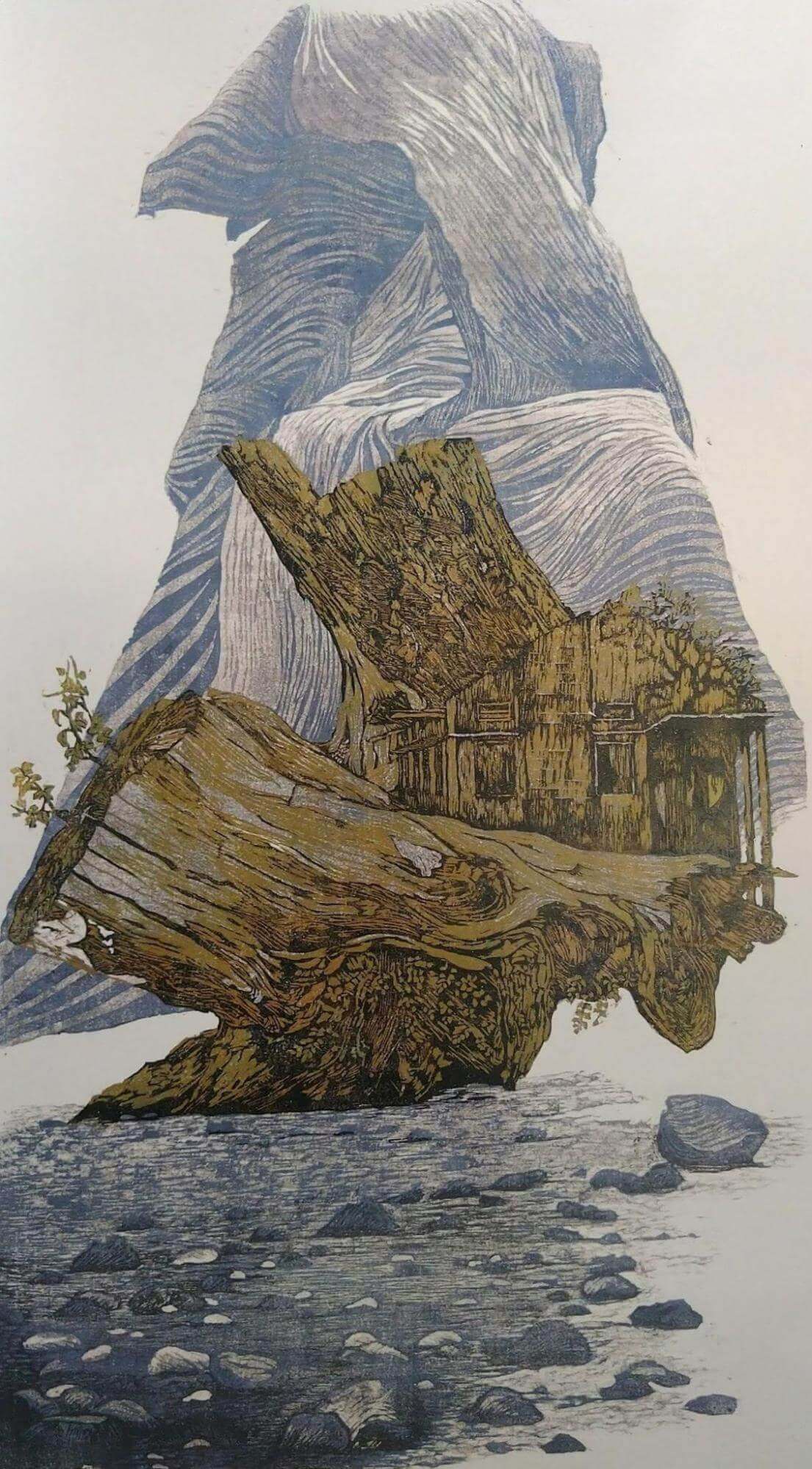
Nalinakshya Talukdar, Unsearch Home, 2023, Woodcut, 120 x 65 cm
Coming from Assam, Talukdar imagines inhabiting nature as his home where the skies, woods and waters meet, creating multiple crevices between their thresholds to offer experiences of nature, in one’s private hiding. However, interjecting each other in colour and form, where the continuities of contours are disrupted, the artists suggest the disjunctures that modern life brings about through man made acts. Mountains fold within themselves the woods that eventually lend resources to construct modest homes. At the same time, the mountain ice melts into its rivers – an idyllic ecological landscape appears continuous yet disjunct in the artist’s prints.
Environment as Time
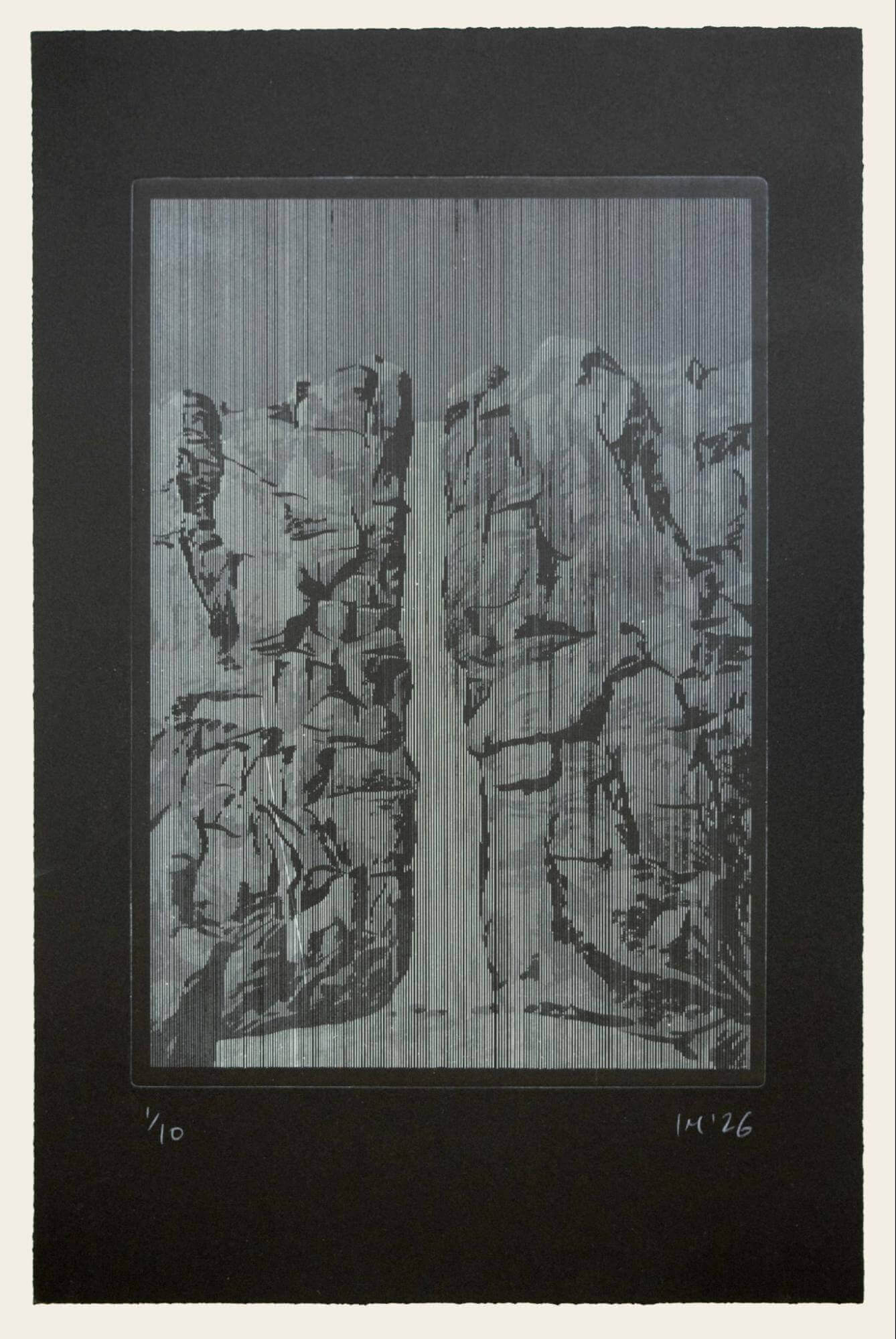
Ian Malhotra, Waterfall I, 2026, Etching, 82 x 57 cm
Ian Malhotra and Jo de Pear traverse time through their print creations as they bring us to inhabit spaces that could be culturally shared or deeply personal. For instance, The Waterfall series of Ian Malhotra creates a clever LED-screen like illusion through the older etching technique. Malhotra makes innumerable fine vertical lines through his work that not only slice the image into extremely small parcels, but also begin to lend the water its essential “fall” in the print. The image is held in the tension of the hard and the soft, the dark and light, the solid and fluid through a mere orchestration of the horizontal and vertical lines of the composition. Moreso, the etched lines bring a destabilising depth to the movement of water, alluding to the early screen animations of waterfalls. In retro-technologizing of image, Malhotra makes us dive into multiple representational worlds that we may have seen across over centuries, in a single glance.
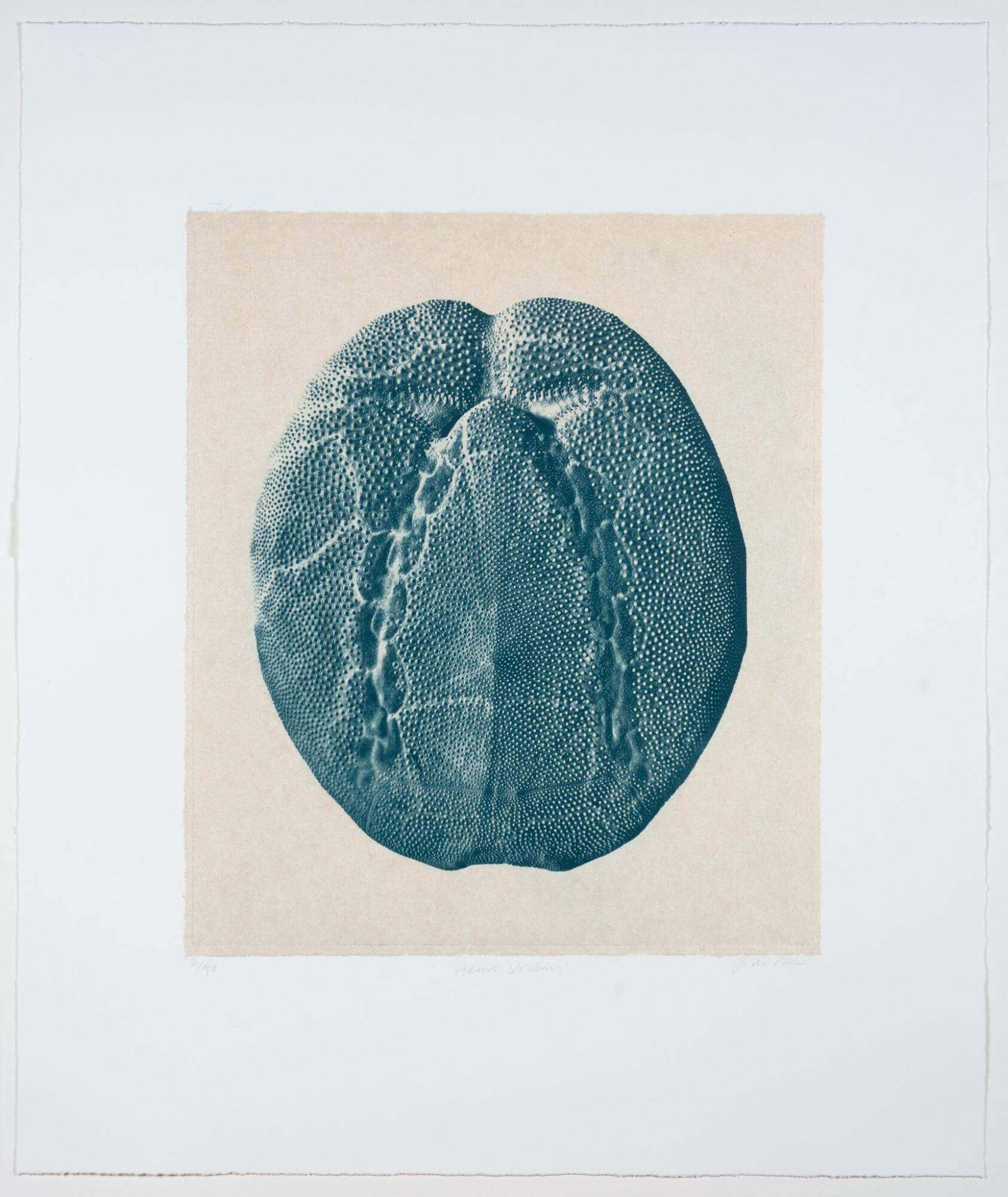
Jo de Pear, Echinoidea I, 2025, Photopolymer, 64 x 54 cm
Jo de Pear invites us to take a microscopic look at the surface of the sea urchin – something that she has been observing and collecting through the encouragement of her biologist mother since childhood. Following the obsession of the early naturalists of the 1800s, the artist produces substantial cyanotypes using hard-touch photopolymer prints that expose the hidden patterns and geometries that might escape the breezing gaze. By holding time in the enlargement of these shells, de Pear produces an immersive landscape that allows the viewer to escape into another world, much like her own self. She admits, “I sort of look at them as like lunar landscapes, the bumpy surface.” The collapse of scale and time within the work of the print allows the artist (and eventually the viewer) to parse distant geographies and experiences within a single moment.
Of Location and Setting
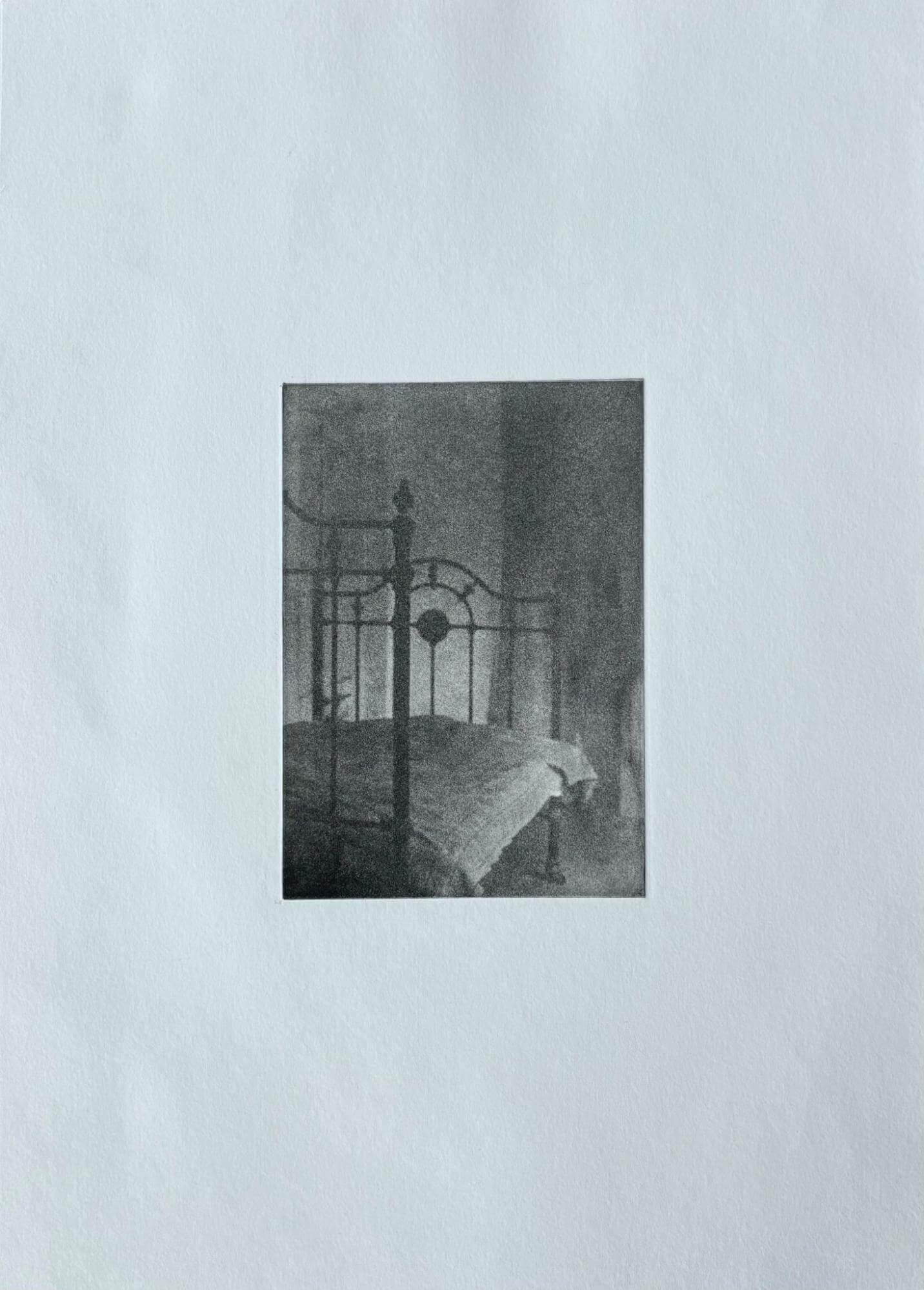
Mila Rae Sarabhai, Endless, 2025, Photopolymer, 37 x 27 cm
Using photopolymer etching, Mila Rae Sarabhai captures everyday moments from her hometown in the city of Ahmedabad (India) onto paper. The close reading of the photographs turned into prints in bare black and white focus on form and light that are forever frozen in time. As architecture, people and shadows merge in the monochromaticism of these granular prints, they evoke a soft feeling of ruin and decay. The prints highlight the disintegrating particles of matter, merely held together in time. These impressionistic flashes of a place remain as a fading trace of memory within which the mind is allowed to wander slowly.
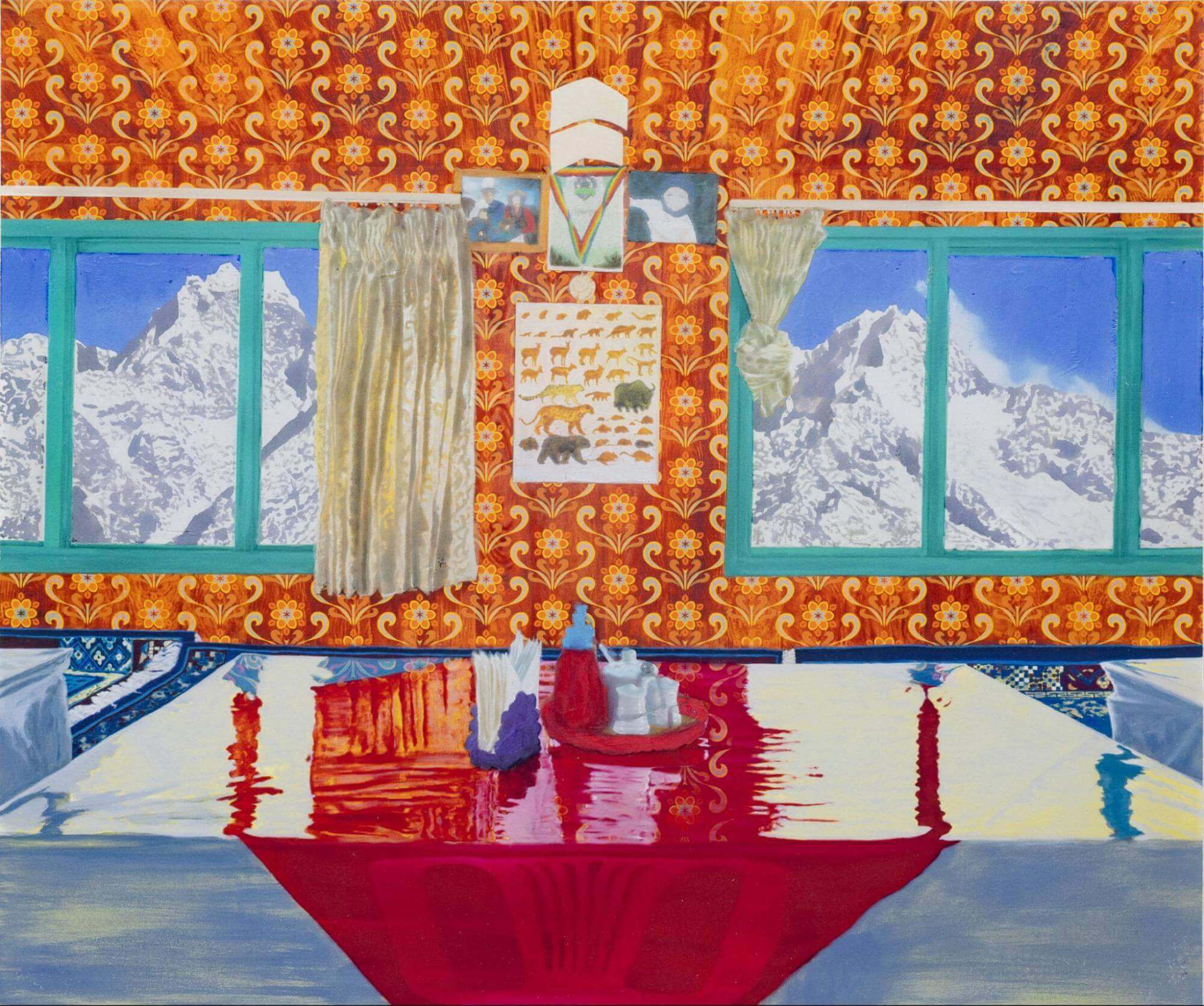
Benjamin Deakin, Calibrator, 2022, Pigment print, 50 x 58 cm
Positioning the viewer inside a mountain-top house and inviting them to sit before a stunning view of ice-covered peaks, bringing them to rest their hands on a kitschy, plastic-covered dining table and eyes drifting to half-closed yellow curtains—Benjamin Deakin highlights the stark contrast between the pristine landscape outside and the garish domestic interior. It is as if we are placed in a moral confrontation between the natural and the manmade. But the narrative flips if we imagine this picturesque view existing only as a framed photograph inside the home. Then the wall decorations, curtains, and table covers begin to feel like extensions of a distant, beautiful landscape absorbed into the clutter of everyday life. These shifting, mirroring relationships are thoughtfully rendered through his use of pigment print and acrylic on paper. The future and the past murkily reflect within the unclear transparency of the plastic sheet on the dining table onto which the artist invites the viewer to sit upon and ponder.
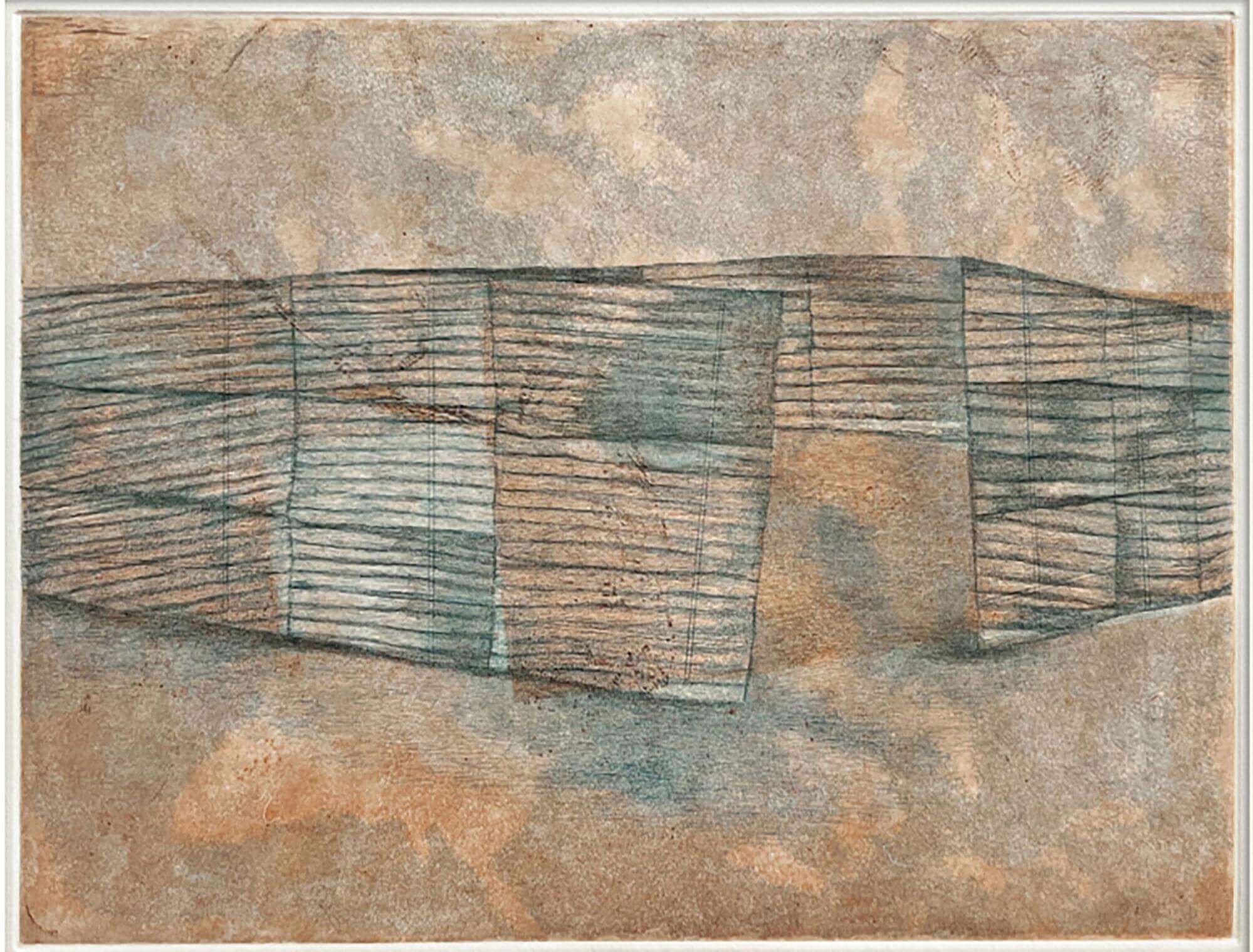
Km. Khushboo, The Way of Living, 2024, Etching, 53 x 66 cm
Khushboo Kumari’s etching on paper engages with the ways in which individuals make and remake boundaries around them to be able to define their own world. The frugal, sublime and gentle form of this enclosure suggests the soft and flexible nature in which it imagines containment that is bound to evolve and change. A single opening apparent on the layered surface leaves room for the other to enter or the self to depart. Yet, the tension of the space inside remains in suspense and compactly held within the architecture of the fence. Her work acknowledges how both – the location and the self – constantly make and remake each other and remain in a state of flux.
Structures of the Self
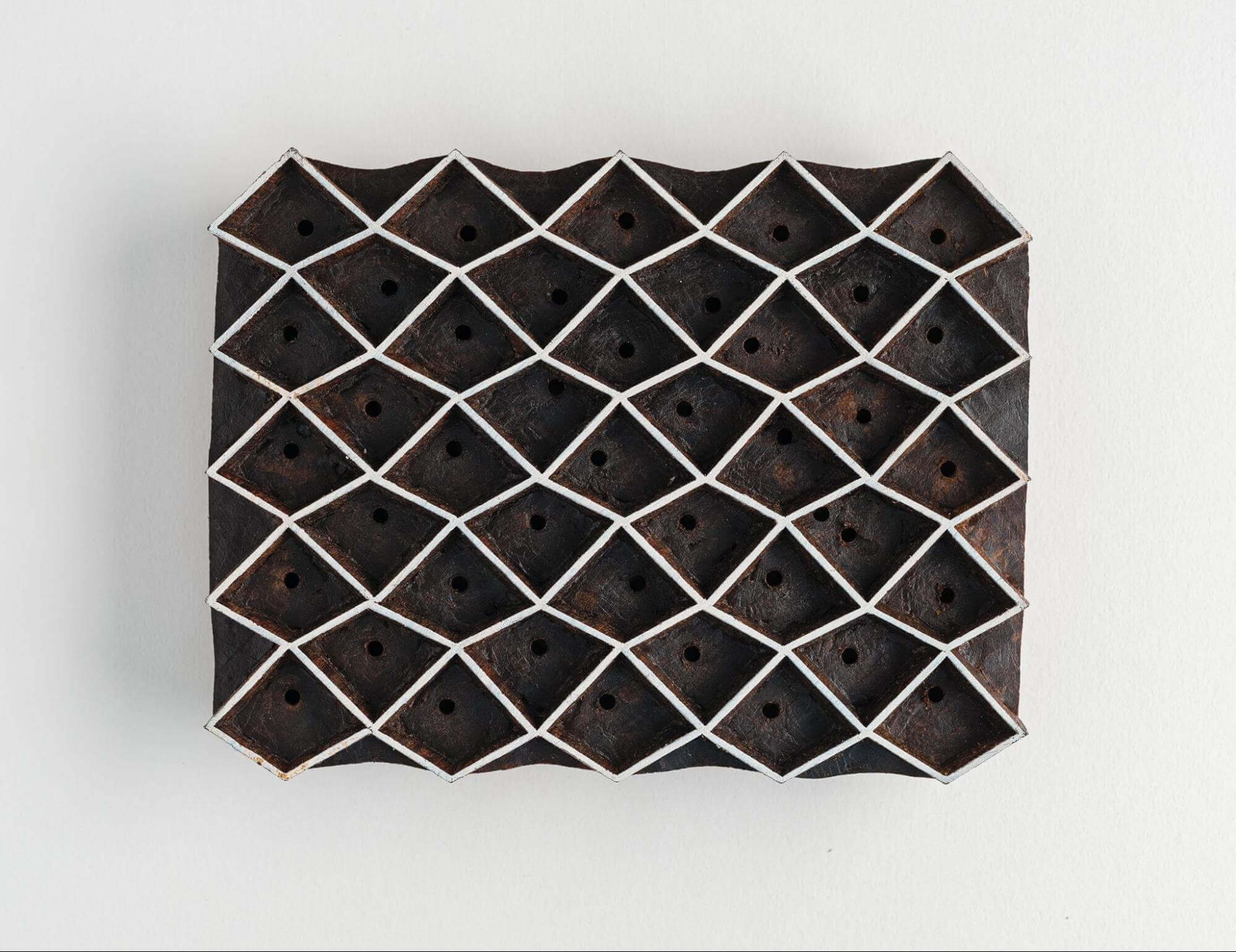
Adia Wahid, The Glyph I, 2026, Hand carved wood blocks, 12×16 cm
In the work of Adia Wahid, patterns unfold as both structure and speculation, reassembling into fields of quiet complexity. Her visual language draws from a kind of mathematical syntax, where forms do not merely repeat but evolve through their encounters. Shapes overlap, interlock and generate new configurations, suggesting a world composed not of singular orders but of multiple, coexisting logics. There is something proto-Escheresque here—not in illusion, but in the recursive play of form, where each intersection becomes a site of invention. Hidden syntaxes emerge in the meeting of two geometries, as if each form carries a latent script that only becomes legible in relation to another. Wahid’s practice dwells in these moments of interaction where order meets deviation, and where the space compresses and releases into new worlds.
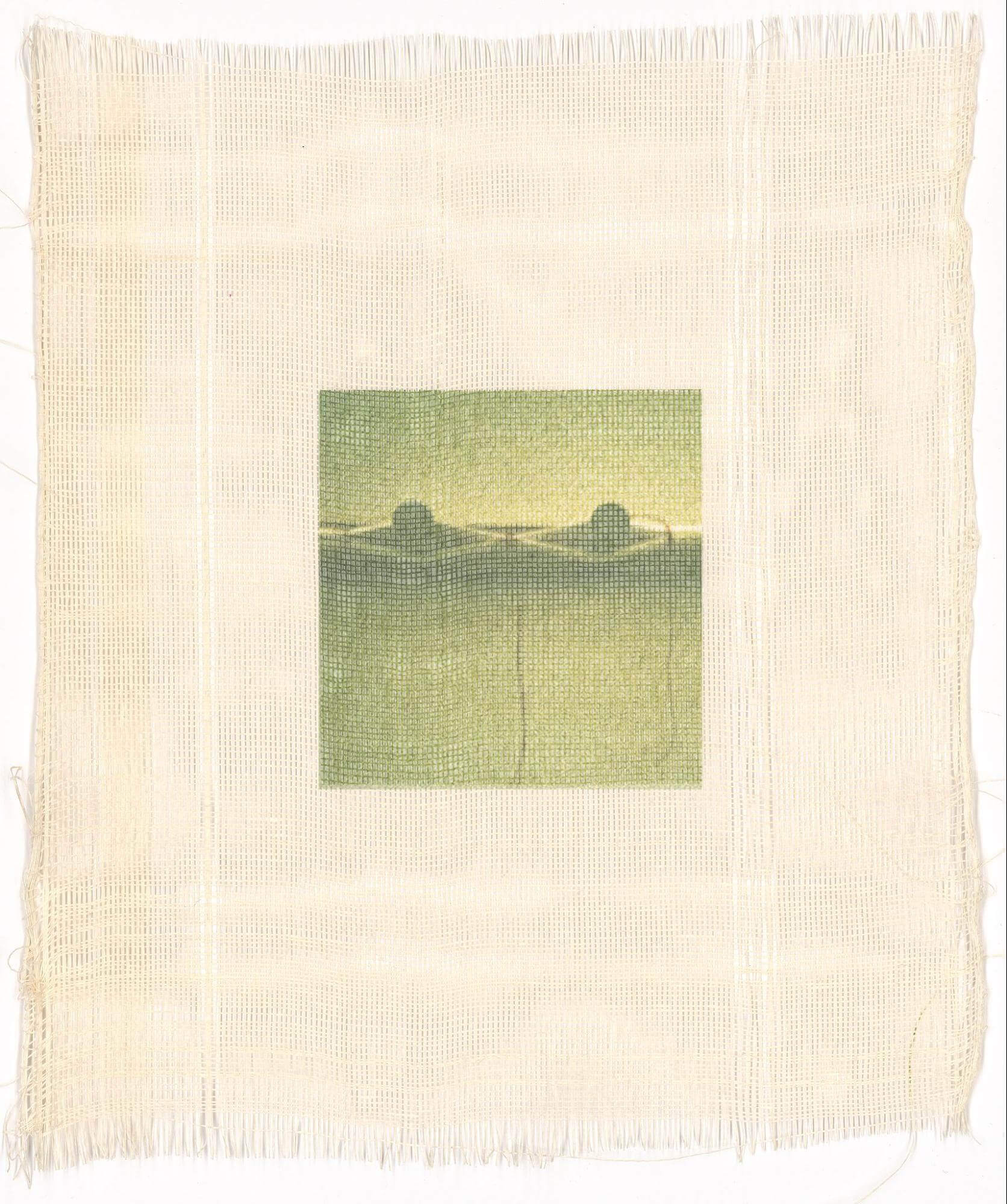
Asha Vaidyanath, Love Letter II (longing), 2026, UV Print on handwoven paper, 35 x 30.5 cm
Asha Vaidyanath splits the solidity of the image as she prints them on loosely woven linen making reality vulnerable. As they fragment and slip through the gaps of the woven fibre, the images become more delicate and fragile. This breaking is not a rupture but a methodical outcome of the weave’s systemic construction, exposing the fragility within systems themselves. The work evokes a sense of bandaging—are these surfaces holding a broken world together, or allowing it to stay apart? In either case, they permit permeability, letting things pass through the medium, while situating the image within a subtle, underlying grid. Strands of linen at the ends of the cloth sometimes left loose suggest a compulsive coming together towards the making of new world in Vaidyanath’s imprinted imageries
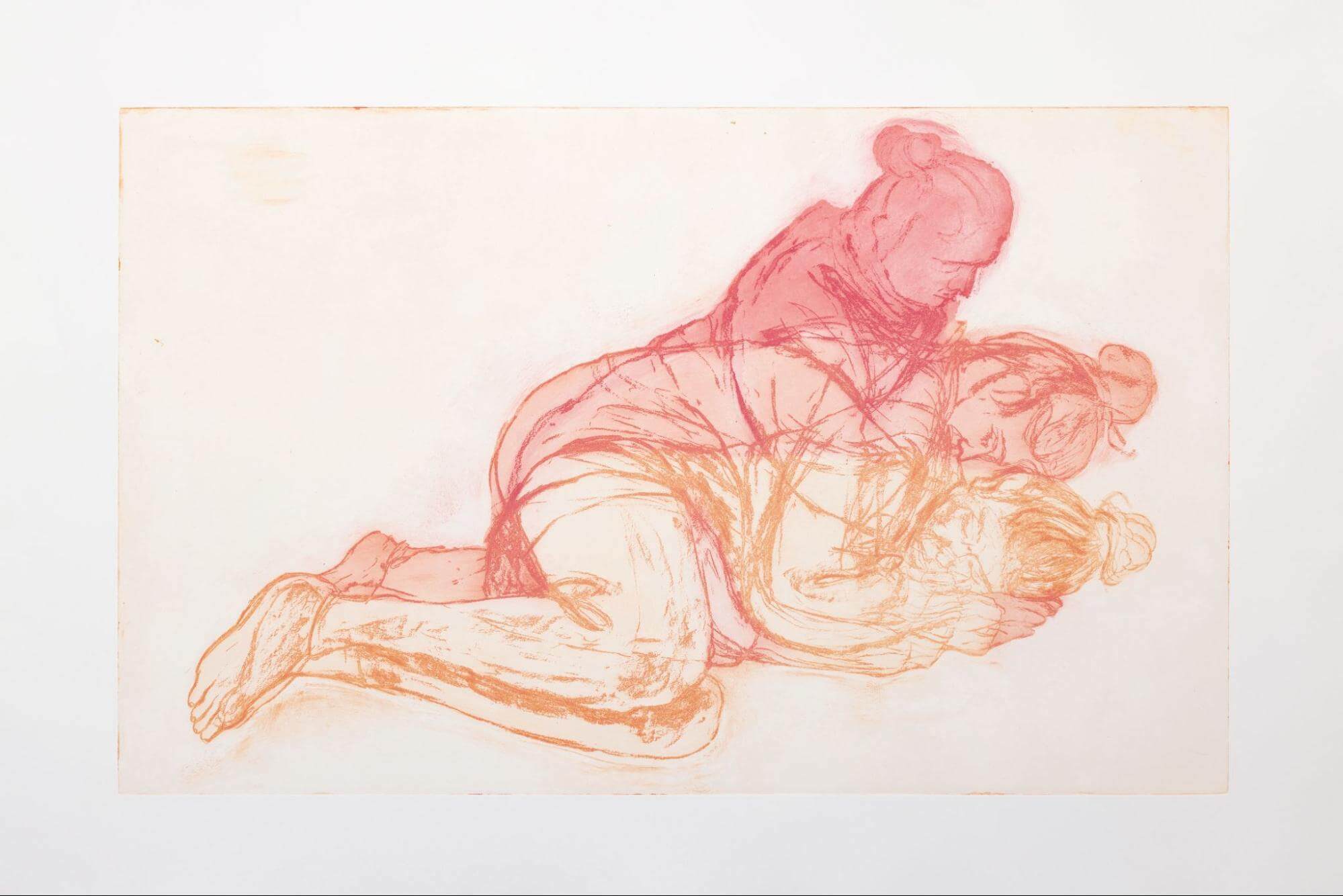
Shivangi Ladha, In The Fold of Night, 2025, Etching, 84 x 124 cm
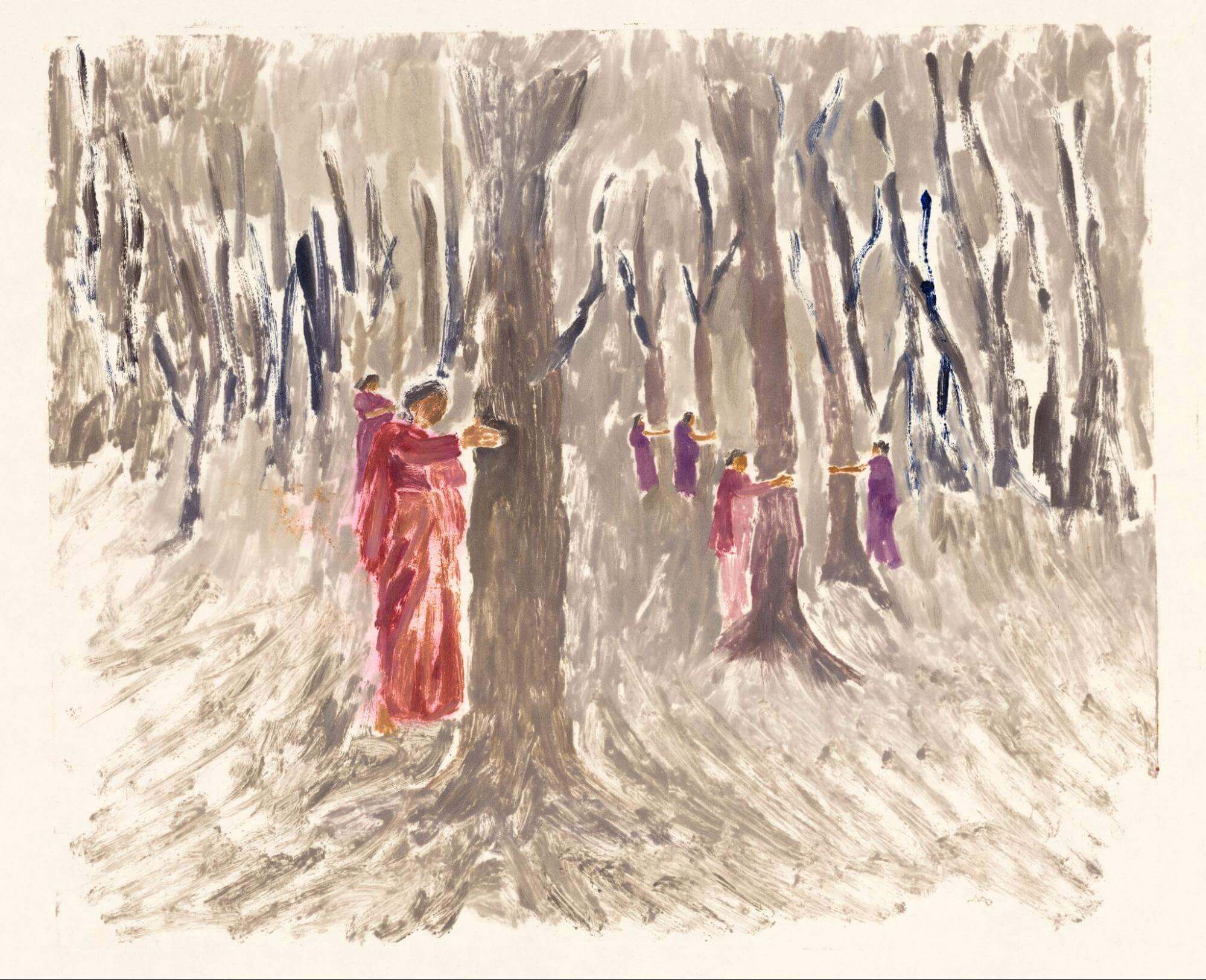
Shivangi Ladha, In Her Movement Sky Remembered II, 2025, Monoprint, 49 x 58 cm
How many varied selves does the body contain? Shivangi’s works often evoke a dialogue between the individual and the collective, the self and the other, and the other within the self. When one looks at her etched aquatint, a seemingly singular body appears to be looped into a state that simultaneously awakens to consciousness and slips into a dream. It is in these repetitive acts that we process the manifest world, where the home appears between the real and the imaginary. Is this the same body, or merely the accumulation of collective consciousness of several bodies? The self extends into the environment to make it a part of this very home, where bodies cling to each other to embrace and protect the silent world around. In its unique pairing of the two works, one is compelled to rethink the contemporary and figure the right state to witness it. Which pasts and which presents must one inhabit? Which time and which place shall we afford to exist? Ladha’s works keep pushing us to think about these questions constantly in relation to the world at large.
Taken together, these eleven practices remind us that home is not simply where one begins, nor only where one arrives. It is an ongoing act of composition—made through memory and forgetting, through landscapes altered by time, through objects carried across borders, and through the fragile architectures of the self. In printmaking especially, where impressions are transferred, layered, repeated and reversed, the medium itself becomes an apt metaphor for dwelling in the contemporary world: identities are pressed by history, marked by movement, and continually re-formed through contact. If displacement defines much of our present moment, these artists respond not with nostalgia alone, but with invention. They show that home can survive as trace, as question, as relation and as a space still being made.